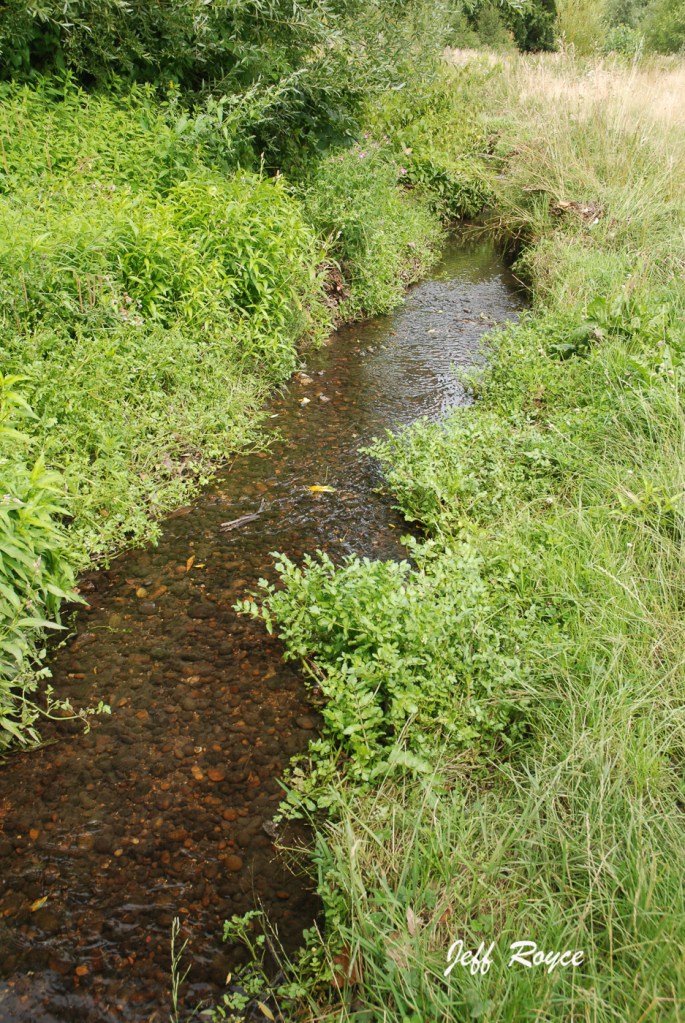
LATEST NEWS: Thanks to all the volunteers who turned up and helped. With the planting work almost completed we now look forward seeing the vegetation gradually grow and make the area better for nature.
Glassmill Pond Planting volunteering days
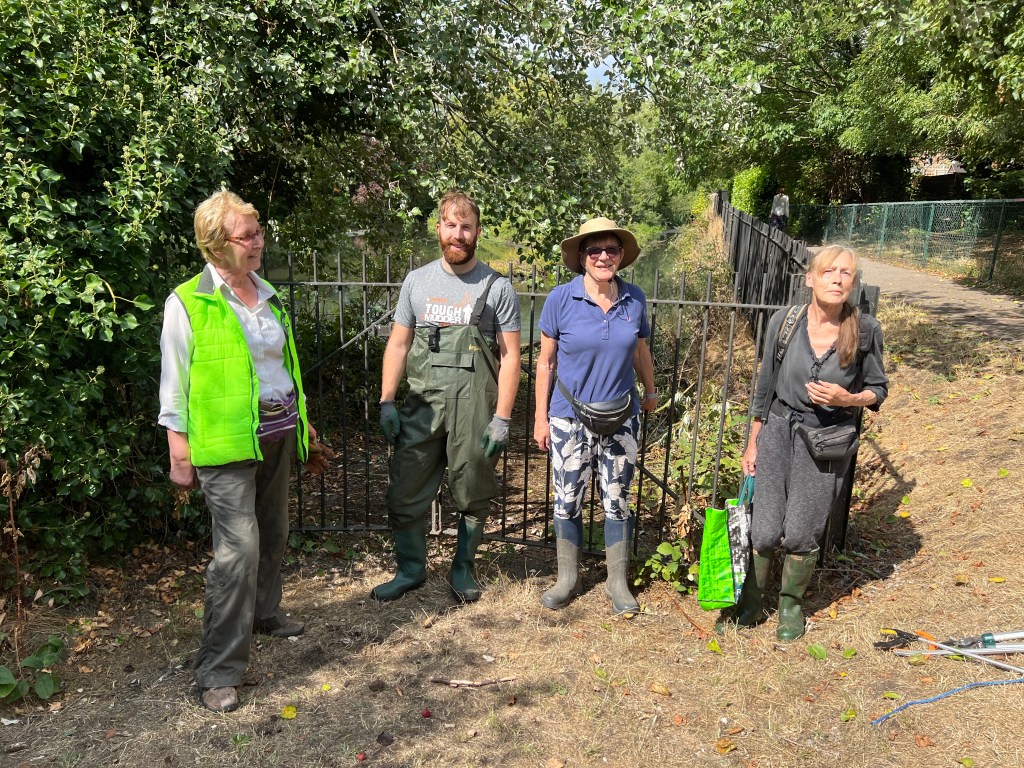
Thames21 are leading a series of working parties on this pond, from November 2024 – March 2025. Please go to our Events page to find out more. Below are some photos from previous such events.
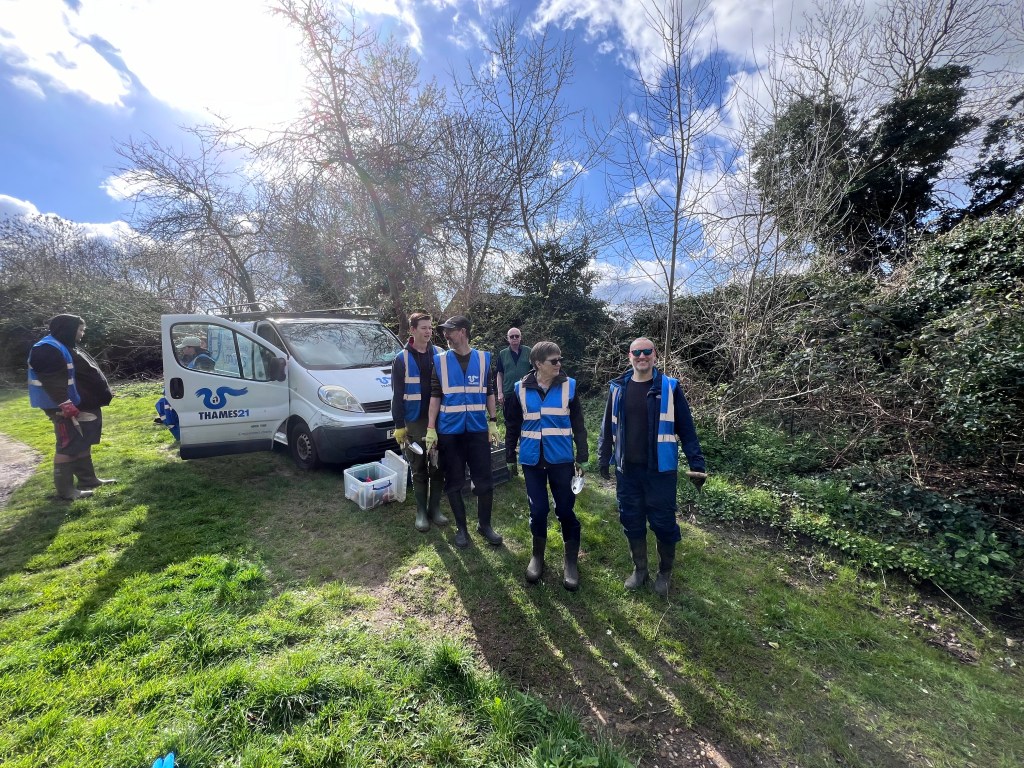
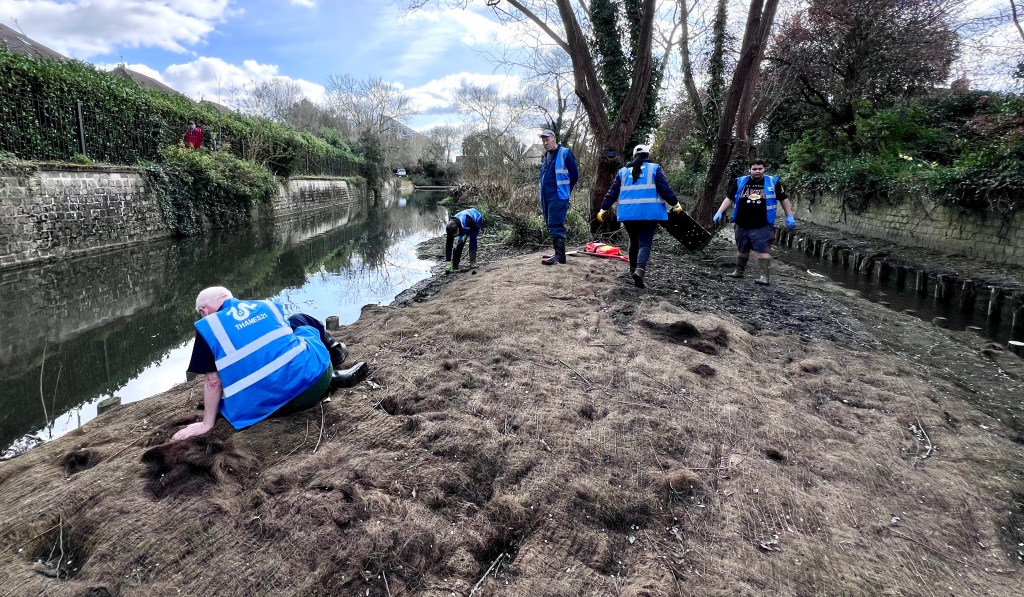
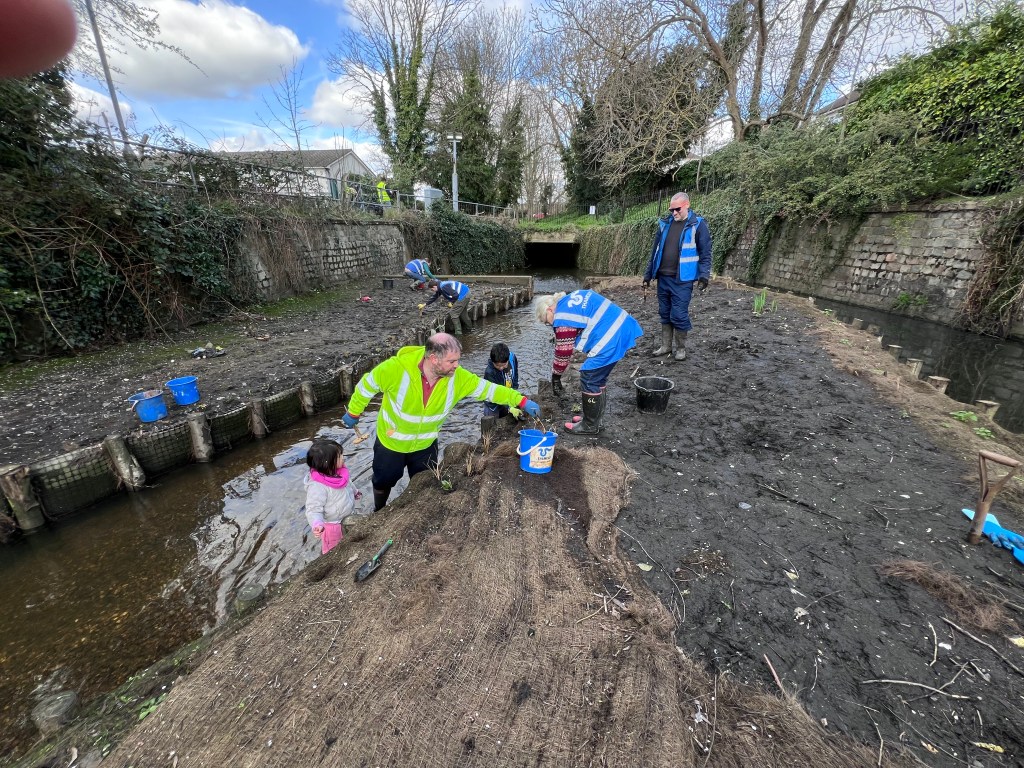
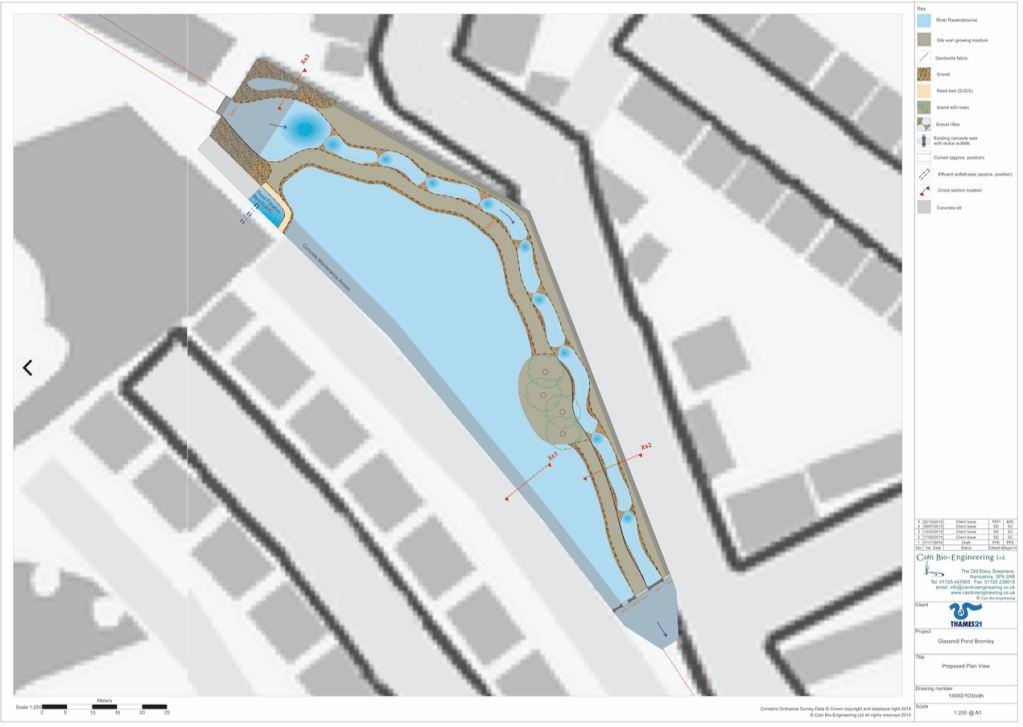
You can see an area plan for the final pond and other drawings on our Glassmill Pond Plans page
What’s been happening
17th October 2023: Construction works completed. Excavated ground will now be left to settle for a while, after which a second phase of planting will then take place. This planting will further enhance the diversity of riverine features, as well as blending it into the wider natural environment.
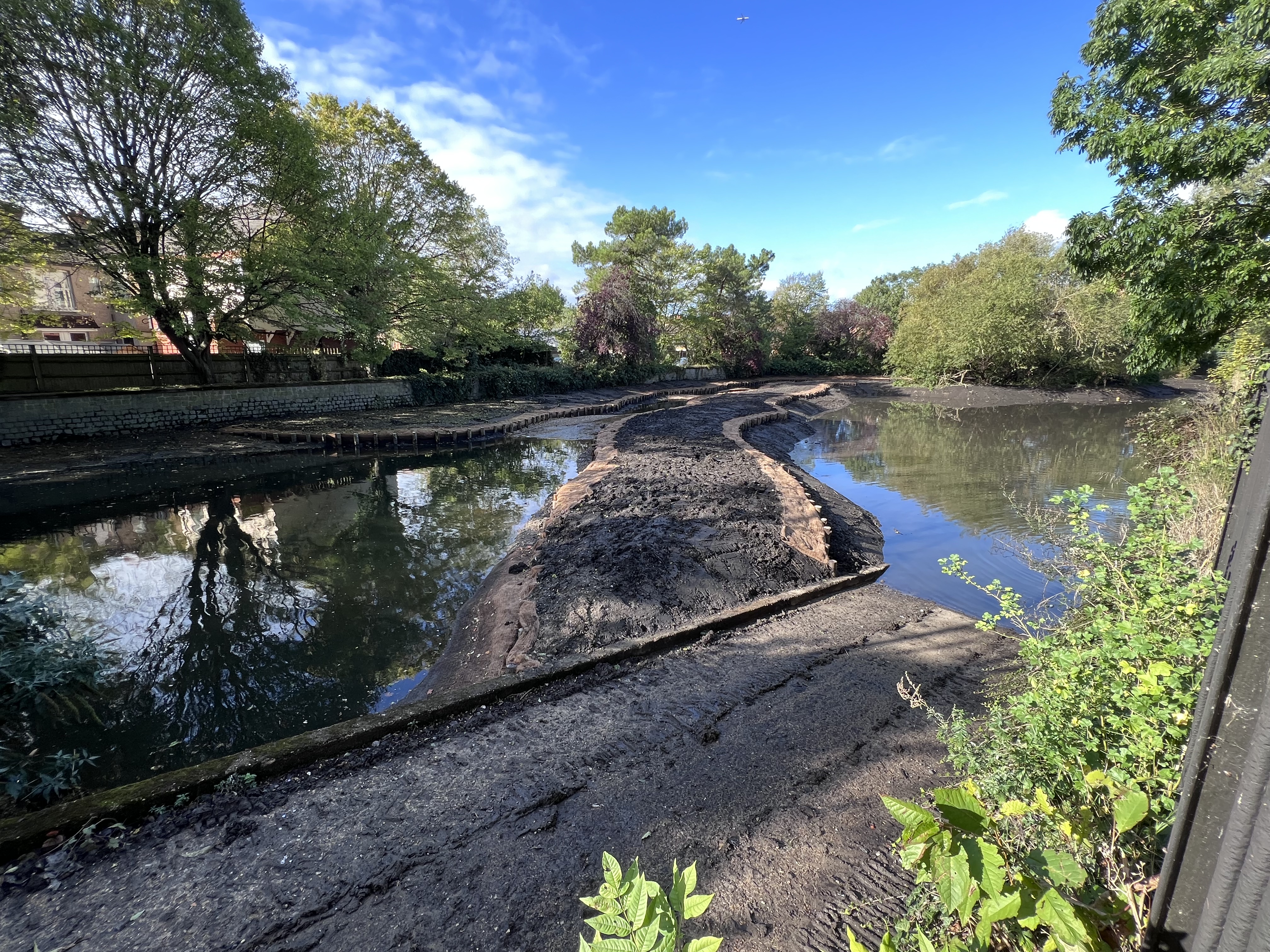
Summer 2024- Foliage now growing well on the bank
Project timescale
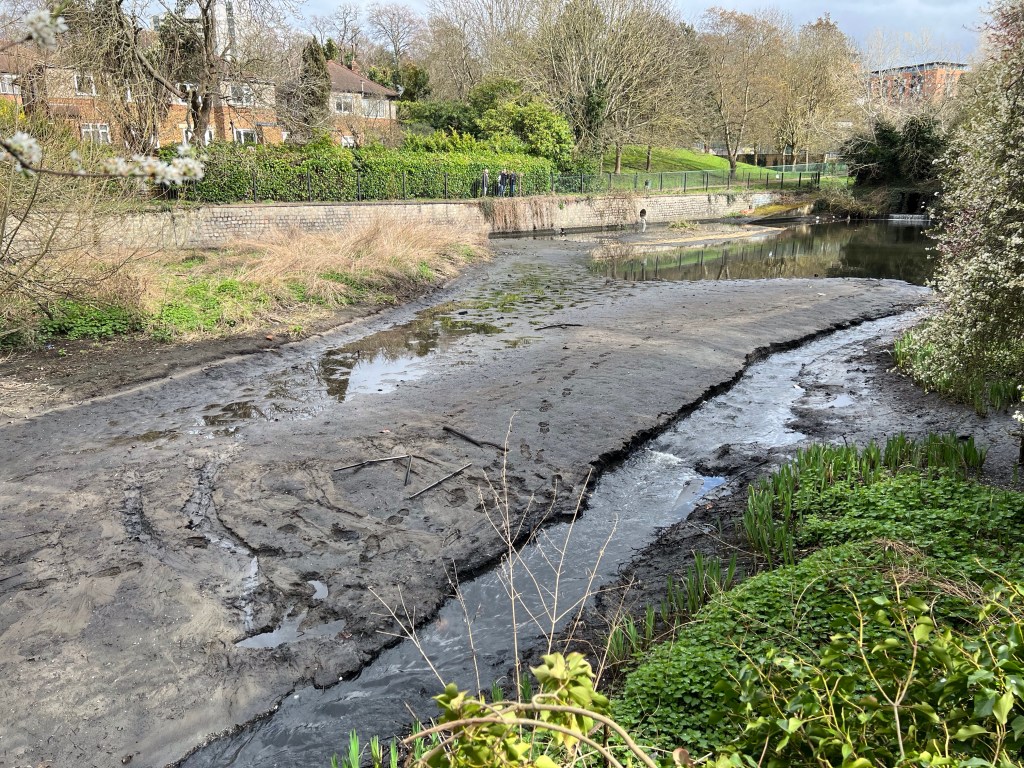
5th September 2023: Construction work commences, with their first task of clearing a channel along the footpath side of lake. This will allow the river to be diverted here, while they then work on renovating the official river channel on the far side. This work has been helped by the lack of rain and subsequent low river flow.
This work has necessitated, for safety reasons, the temporary diversion of the adjacent public footpath.
24th July 2023: Thames21 contractor drove the first of three test piles into the bed of the pond to confirm the planned construction method.
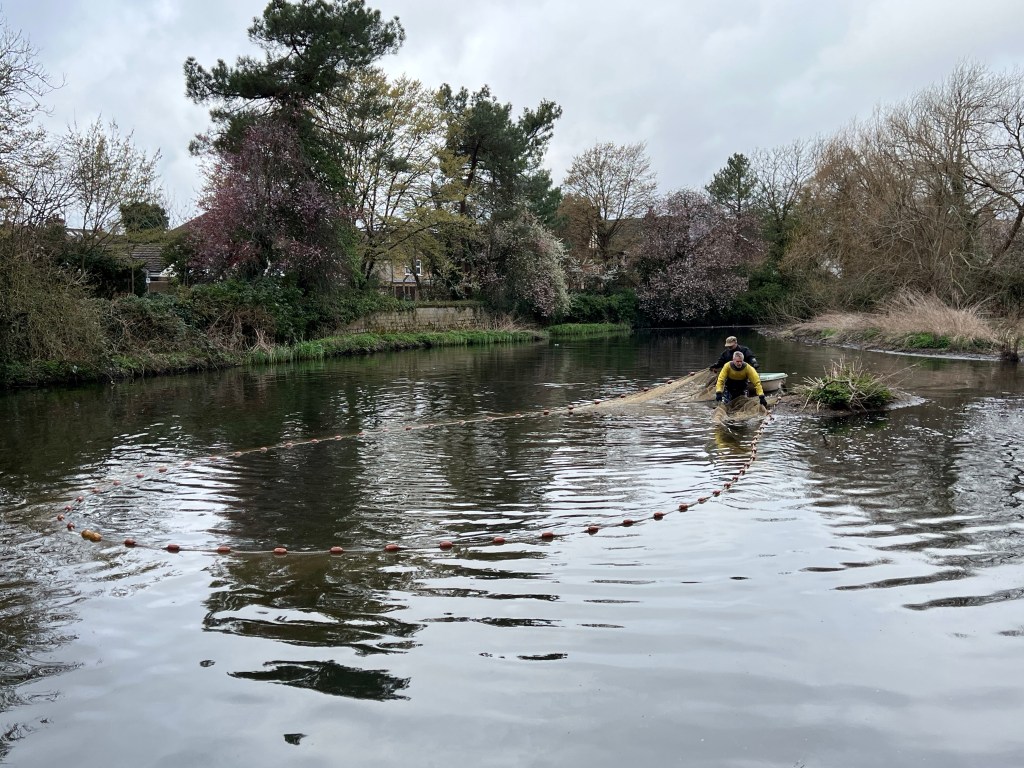
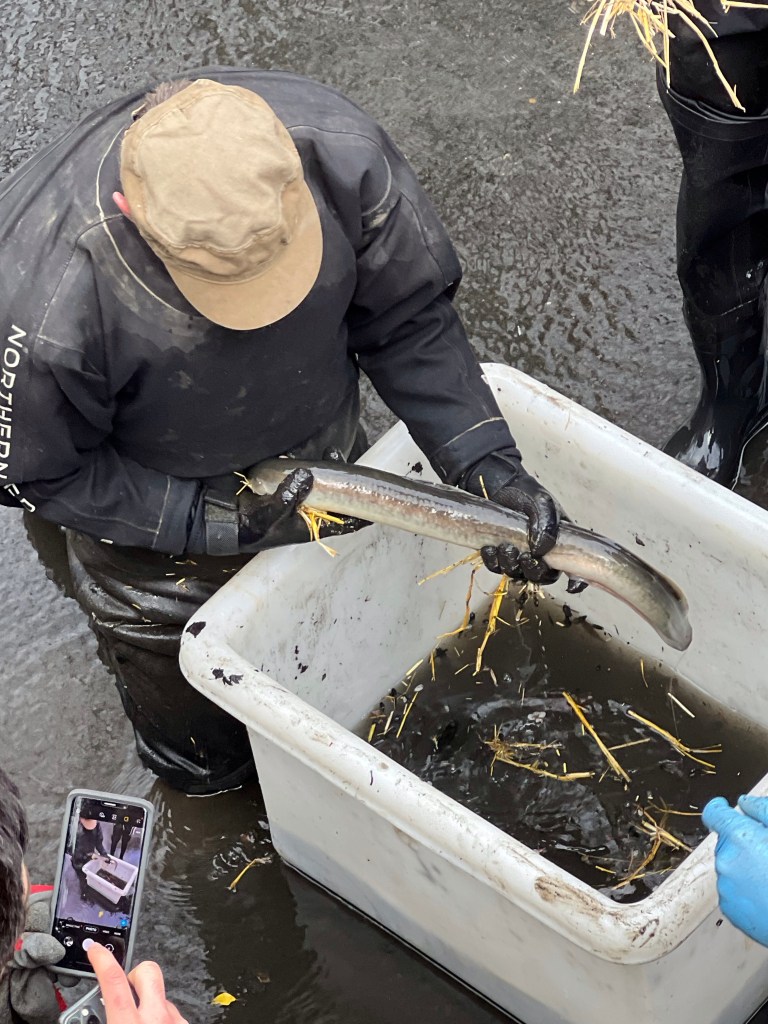
21st March 2023: Thames21 removed the weir boards to lower the water level of the pond, essential for the next phase of work. Beforehand specialists caught all the fish in the pond and subsequently released them safely downstream. Fish found included sticklebacks, and three large eels.
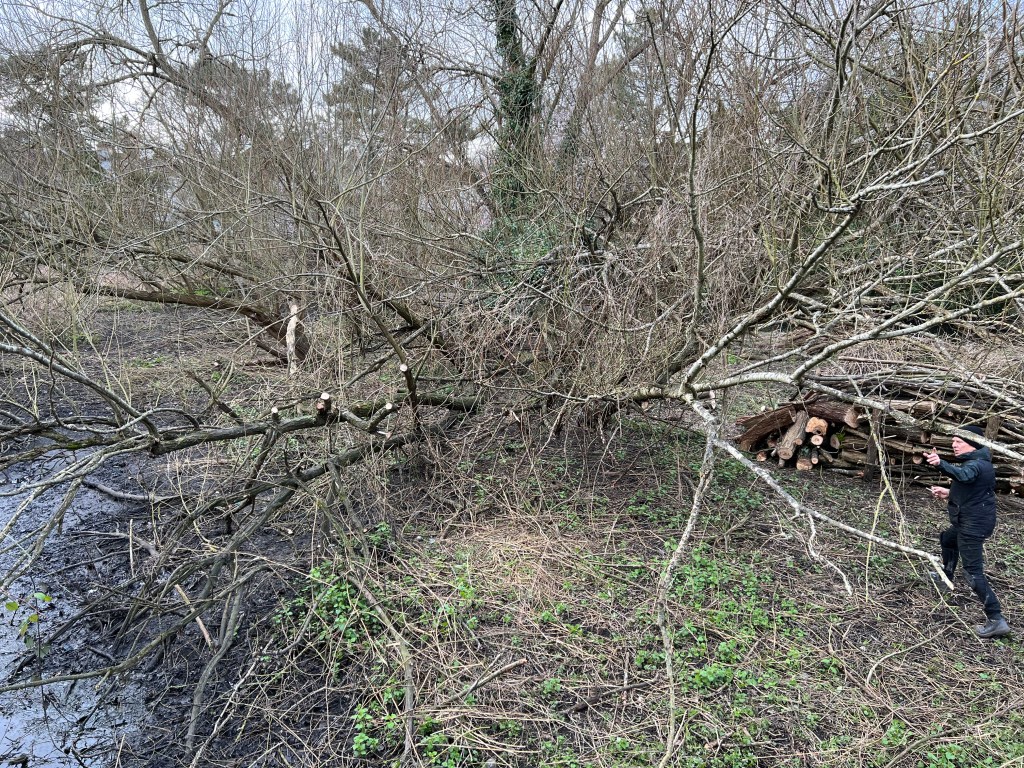
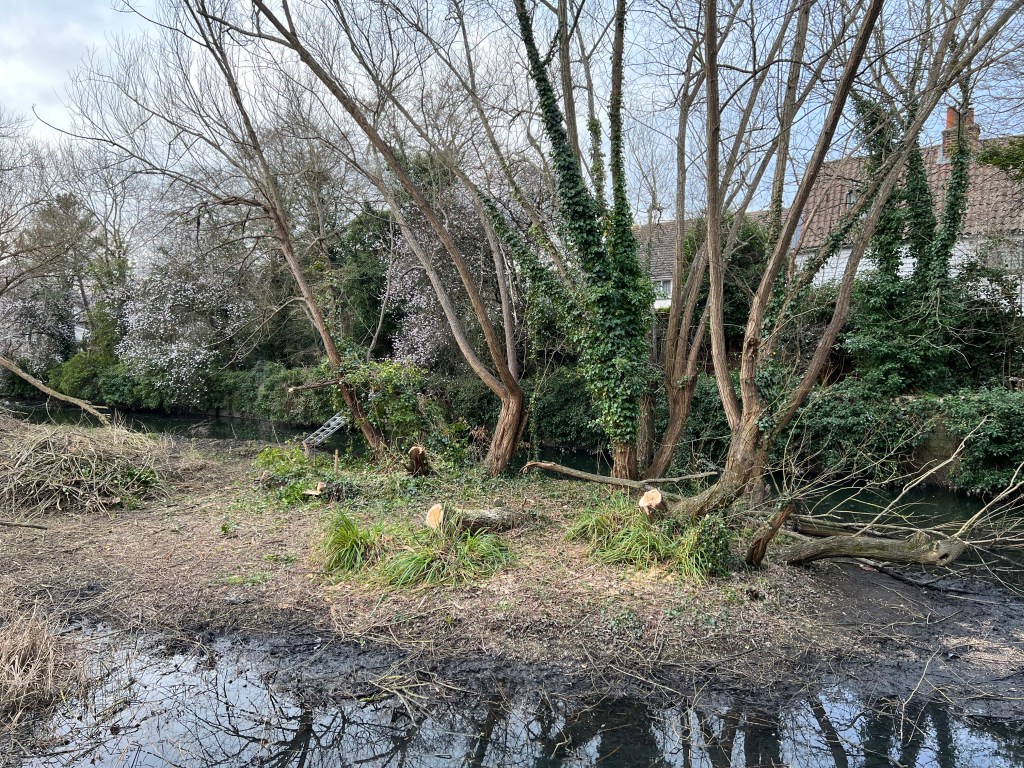
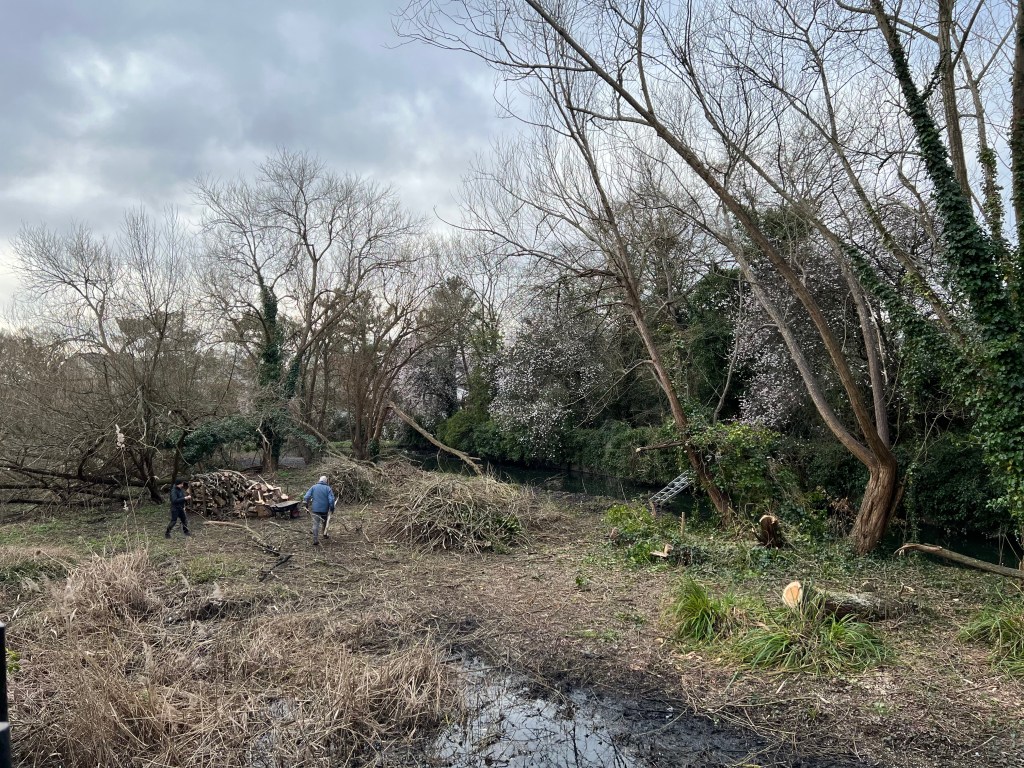
27th & 28th February 2023: Contractors came on site to carry out urgently needed tree works on the island. This was to remove/cut back overgrown trees, allowing better sunlight to reach ground vegetation. This was undertaken after a formal habitat survey by outside experts. Trees retained included likely roosts for both birds and bats. Below are views before and afterwards.
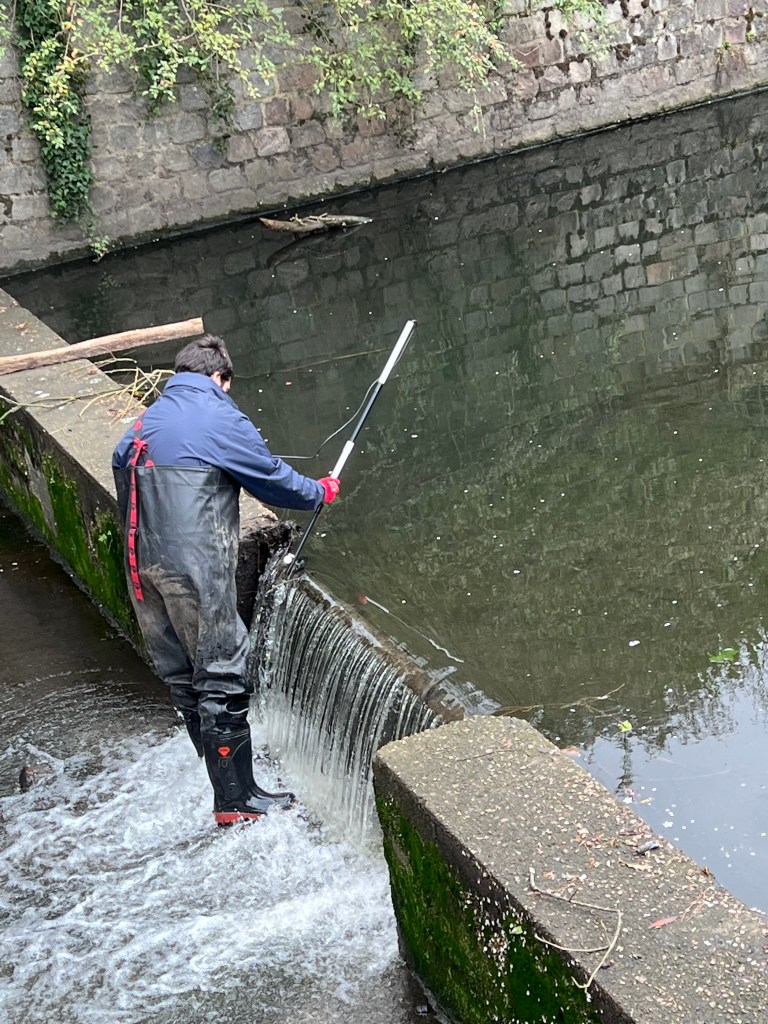
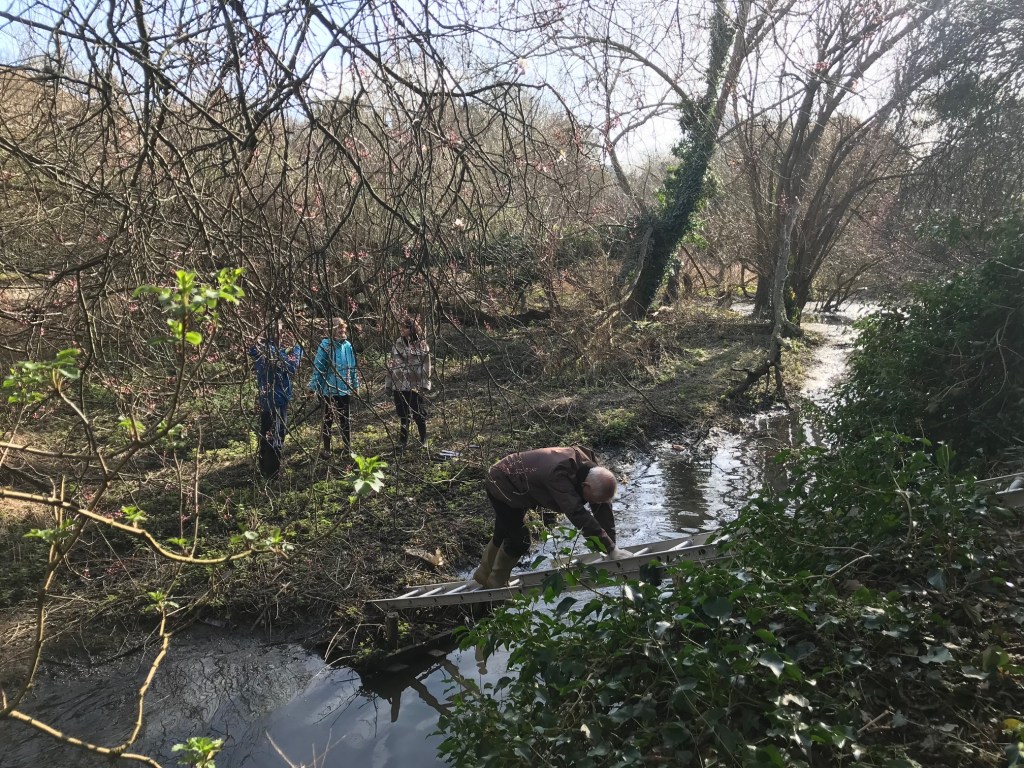
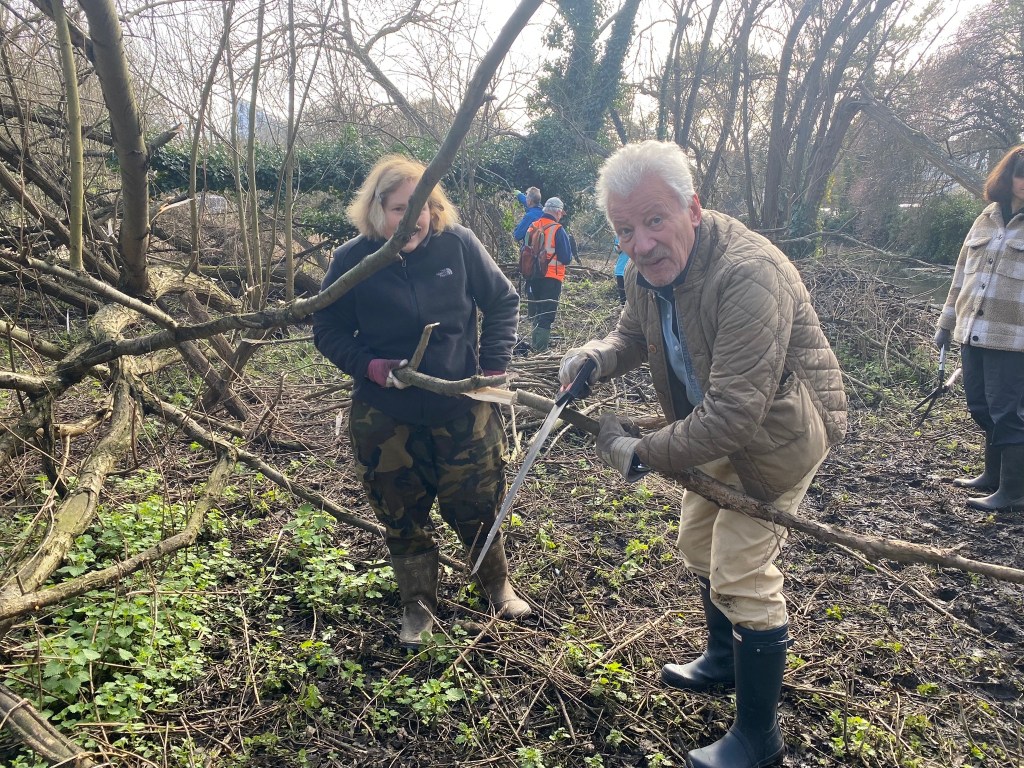
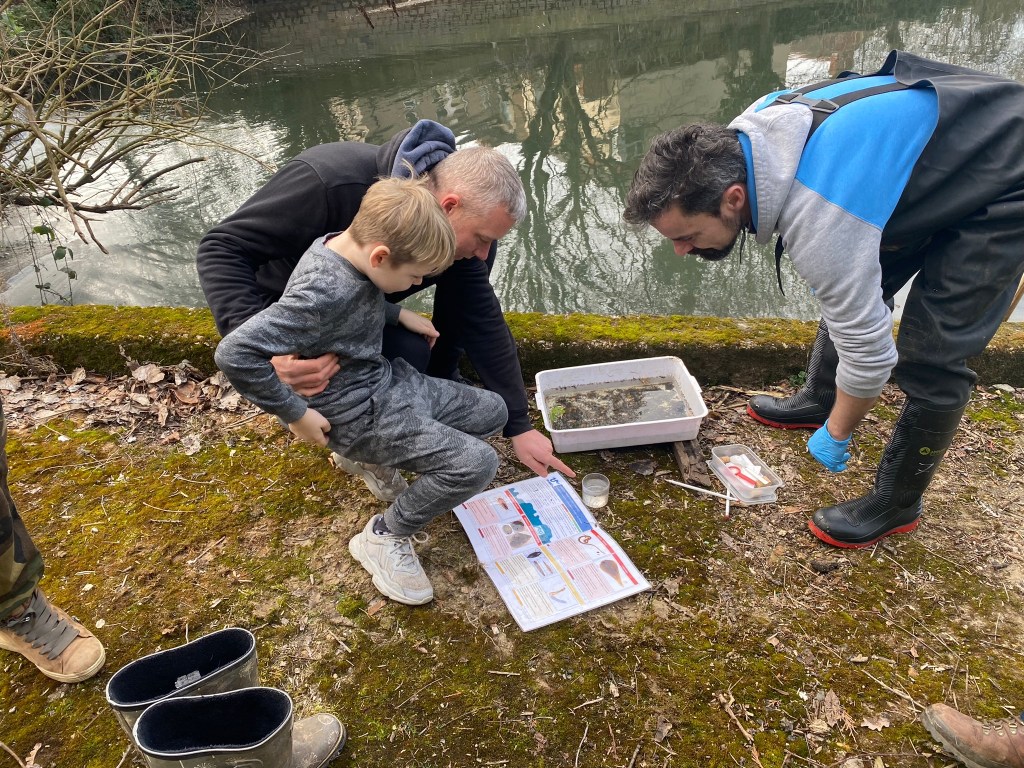
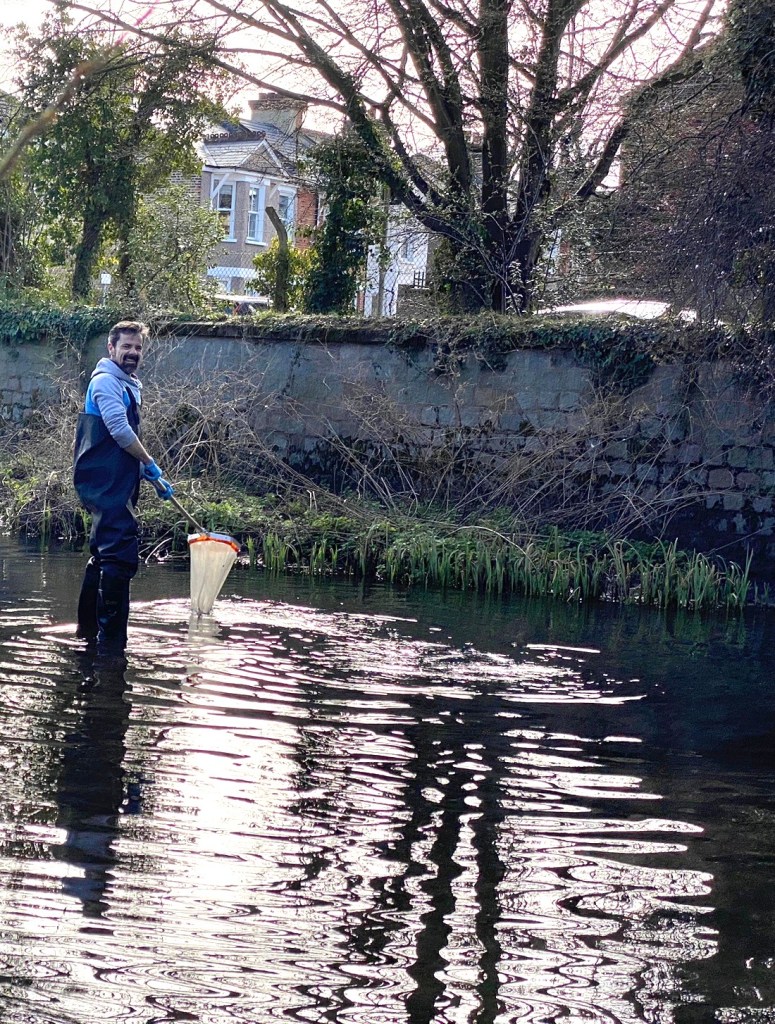
Sunday 19th February 2023 we held a combined volunteers work party, along with a Thames21 public engagement event. This involved cutting back vegetation, sampling water for any invertabrates. Thames21 also explained the next stages in the project to refurbish the pond. A short while after contractors carried out urgently needed tree work, including pollarding some very overgrown willow trees. Some of the photos taken can be seen below.
Some background history
The River Ravensbourne and its associated mill are greatly valued. Since it was first recorded, in the Domesday Book, it has taken several different forms, ending up as a mill for polishing glass mirrors hence the road being named Glassmill Lane . However over many years the pond has become heavily silted up, with Bromley council having stopped removing in the mid 1980’s. In addition occasional pollution incidents have occurred, some of them serious. The Environment Agency and Thames Water have taken the appropriate actions in response to such incidents, but underlying causes including domestic waste water misconnections remain. In March 2022 Thames Water started to investigate potential sources of pollution, and required remedial action, at some 44 separate infalls upstream from the pond
Despite many frustrating years of limited good news, we continued to work with various organisations, seeking to renovate the mill pond and so to enhance its potential biodiversity & heritage assets. We have been doing this in partnership with the following organizations:-
- Ravensbourne Catchment Improvement Group (RCIG)
- London Borough of Bromley (owners of the site)
- Environment Agency (statutory body)
- Thames Water (local water utility)
- Thames 21 (specialist volunteer group
Earlier in 2015 Thames21 outlined draft proposals at a public meeting, and this resulted in an initial engineering proposal (see below). In brief this envisions a rejuvenated river channel on the western side, allowing fish, etc to migrate upstream. A large pond area would be created on the eastern side. The reconfigured island would be raised by reusing the silt excavated on site.
Sadly subsequently nothing much happened, until in January 2020, when we attended a meeting of a rejuvenated Ravensbourne Catchment Improvement Group, . Here we gave a presentation highlighting the issues and urging a progress on this project. This was received very favourably by attendees representing many of the above listed organisations.
A copy of this powerpoint presentation can be viewed HERE. See either above or our BLOG page for the very latest news.
In early 2021 some funding from the Environment Agency enabled further planning and necessary statutory permissions to be undertaken, prior to seeking full funding for the implementation of this project. This included the taking a number of silt samples and their subsequent testing. Unfortunately this confirmed some contaminated silt was present, which seriously impacts the viability of the project. As of early August 2022 yet more silt samples were taken. If results of these tests are favourable then approval will be requested from EA to proceed. More recently an onsite visit measured silt levels, to estimate the quantity of such material that would need to be moved to achieve the desired layout.
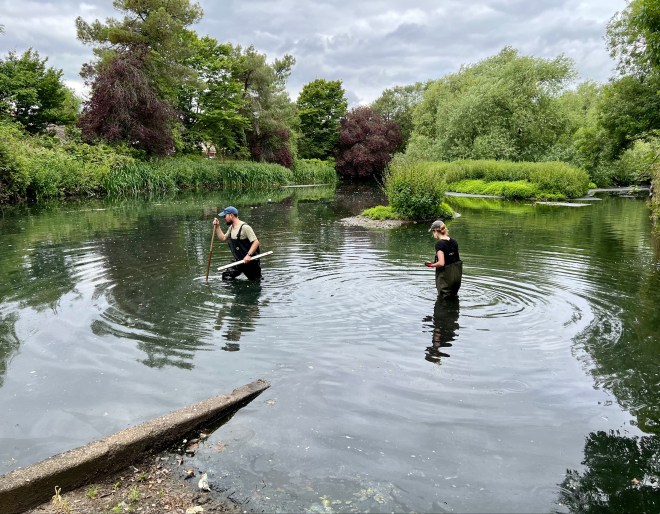
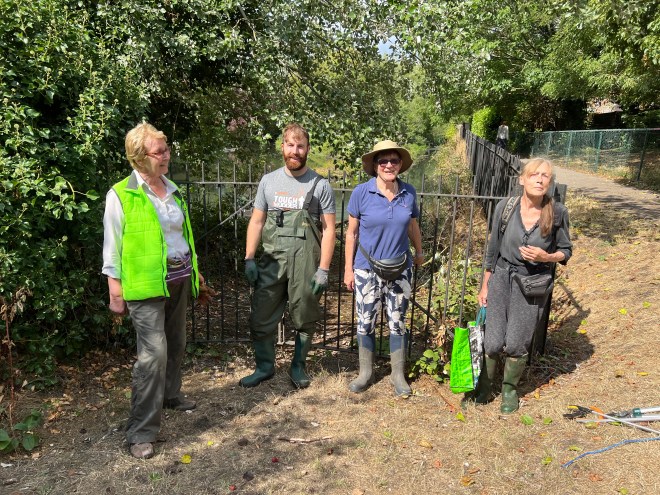
In the meantime work parties continue in order to maintain the site to a reasonable standard, until the main project to rejuvenate the Mill Pond is able to commence. We are seeking support among the council, local residents and groups. If you are interested please contact us for further information.
In the longer term we would like to restore the course of the River Ravensbourne through adjacent Queens Mead to a more natural state. When completed this would both slow down the river at high flow as well improve the biodiversity of the park. Over the last few decades there have been several draft proposals for this, from the Environment Agency in 2008, and an earlier one by its predecessor the National Rivers Authority, but so far none have got beyond the initial planning stage.
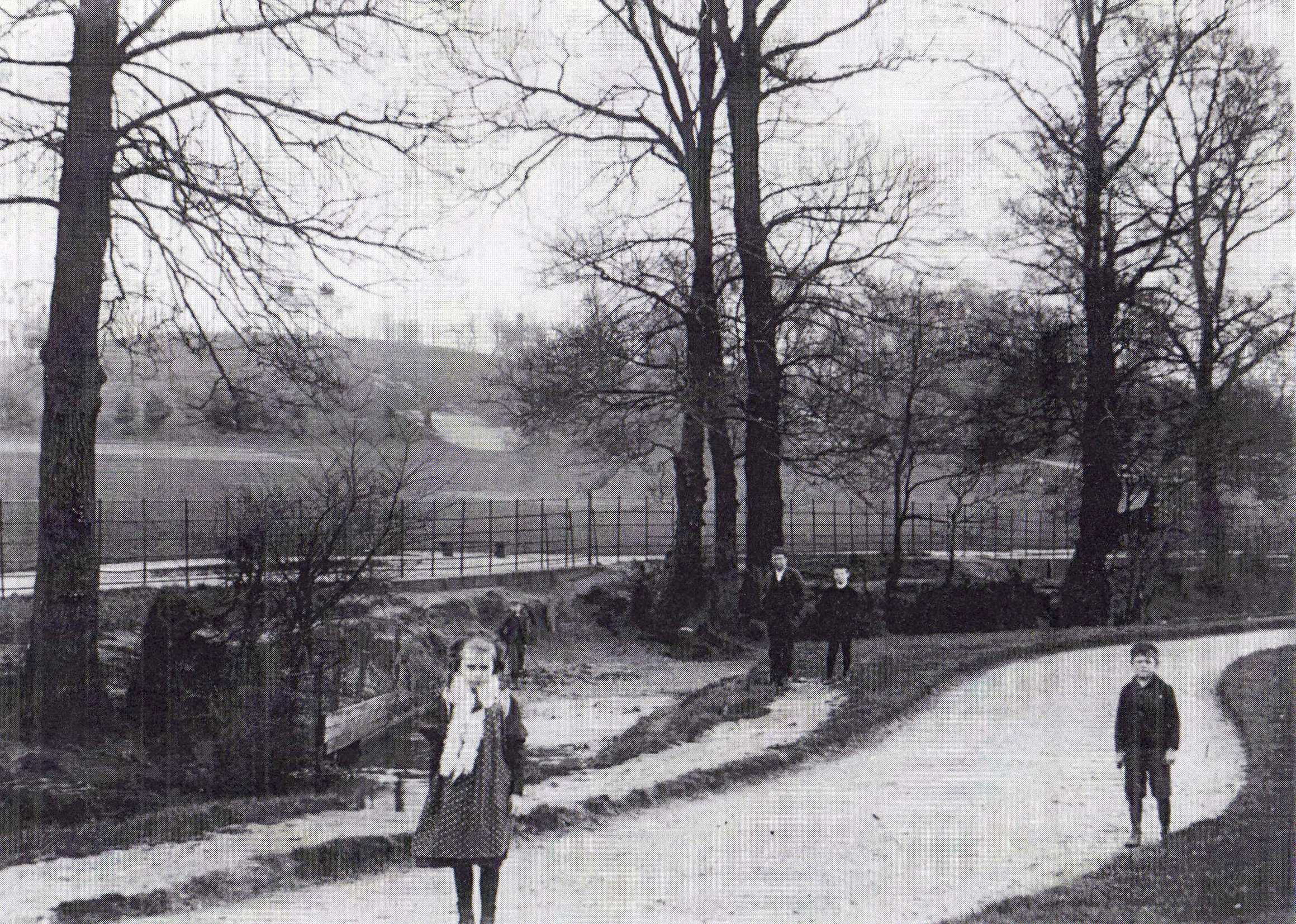
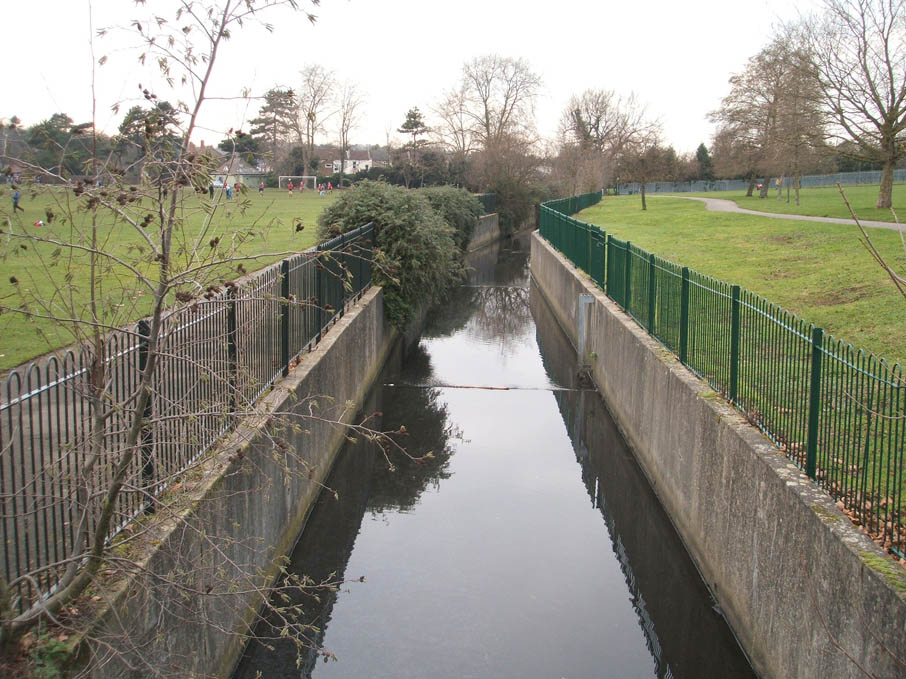
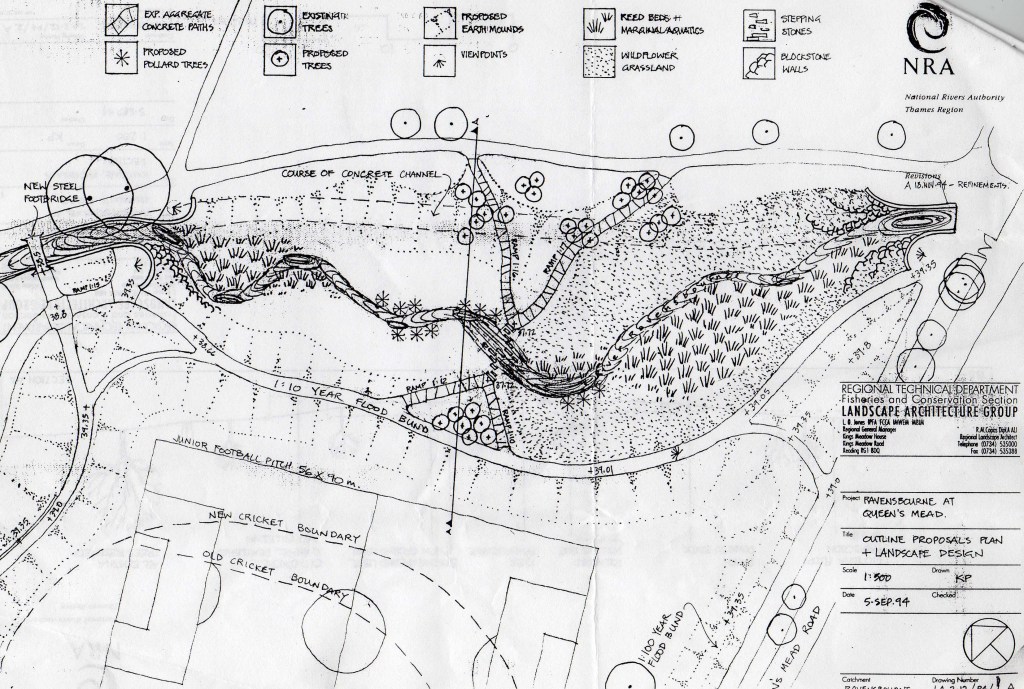
We are very conscious of the concerns of local householders about the potential for flooding of their properties. Any scheme would be designed to eliminate the risk of flooding of any houses. In both 1995 (NRA) and 2005 (EA/Ove Arup) plans for this area were not funded. The NRA scheme shown below gives an indication fo what could be achieved.
Besides the naturalisation of the river the wider objectives could be to –
- Conserve and improve the ecology of slopes of Martins Hill.
- Improve access for local people and groups for educational uses.
- Employ this undulating area for better healthy lifestyle activities.
- Enhance the sports provision on Queens Mead.
- Improve links with other green spaces in the area
A good example of the improvements we are seeking can be found on Chinbrook Meadows, adjacent to Grove Park Station. Here the Quaggy Waterways Action Group (QWAG) and other organisations have transformed a stretch of the River Quaggy that was previously in a concrete channel like ours (see below). Go along and see what we could achieve.